If you shop at a US supermarket or a UK one like Tesco, Sainsbury’s or Aldi, the high-protein foods are the same everywhere: eggs, chicken, fish, dairy, beans and soy. The tricky part is knowing how much protein is in a normal serving and how many calories come with it. This chart lists both, in US and metric units, and the sample day below shows how to reach about 132 g of protein without relying on supplements.
High-protein foods: animal and dairy sources
| Food | Serving | Protein | Calories ≈ |
|---|---|---|---|
| Chicken breast, cooked, skinless | 4 oz (113 g) | 35 g | 185 |
| Chicken thigh, cooked, skinless | 4 oz (113 g) | 29 g | 235 |
| Turkey breast, roasted | 4 oz (113 g) | 34 g | 155 |
| Lean ground beef (90% lean), cooked | 4 oz (113 g) | 29 g | 245 |
| Pork tenderloin, roasted | 4 oz (113 g) | 29 g | 160 |
| Salmon, baked | 4 oz (113 g) | 25 g | 235 |
| Cod or haddock, baked | 4 oz (113 g) | 26 g | 120 |
| Shrimp / prawns, cooked | 4 oz (113 g) | 27 g | 110 |
| Tuna, canned in water, drained | 4 oz (113 g) | 22 g | 100 |
| Eggs, large, whole | 1 egg | 6 g | 72 |
| Egg whites | 3 large whites | 11 g | 52 |
| Greek yogurt, plain nonfat | ¾ cup (170 g) | 17 g | 100 |
| Skyr, plain | 5.3 oz (150 g) | 16 g | 95 |
| Cottage cheese, low-fat | ½ cup (113 g) | 12 g | 90 |
| Milk, 2% / semi-skimmed | 1 cup (240 ml) | 8 g | 120 |
| Cheddar cheese | 1 oz (28 g) | 7 g | 115 |
| Whey protein powder | 1 scoop (~30 g) | 20–25 g | 110–130 |
Approximate values for cooked weights unless stated, based on USDA FoodData Central. Oil, butter and sauces add calories but no protein.
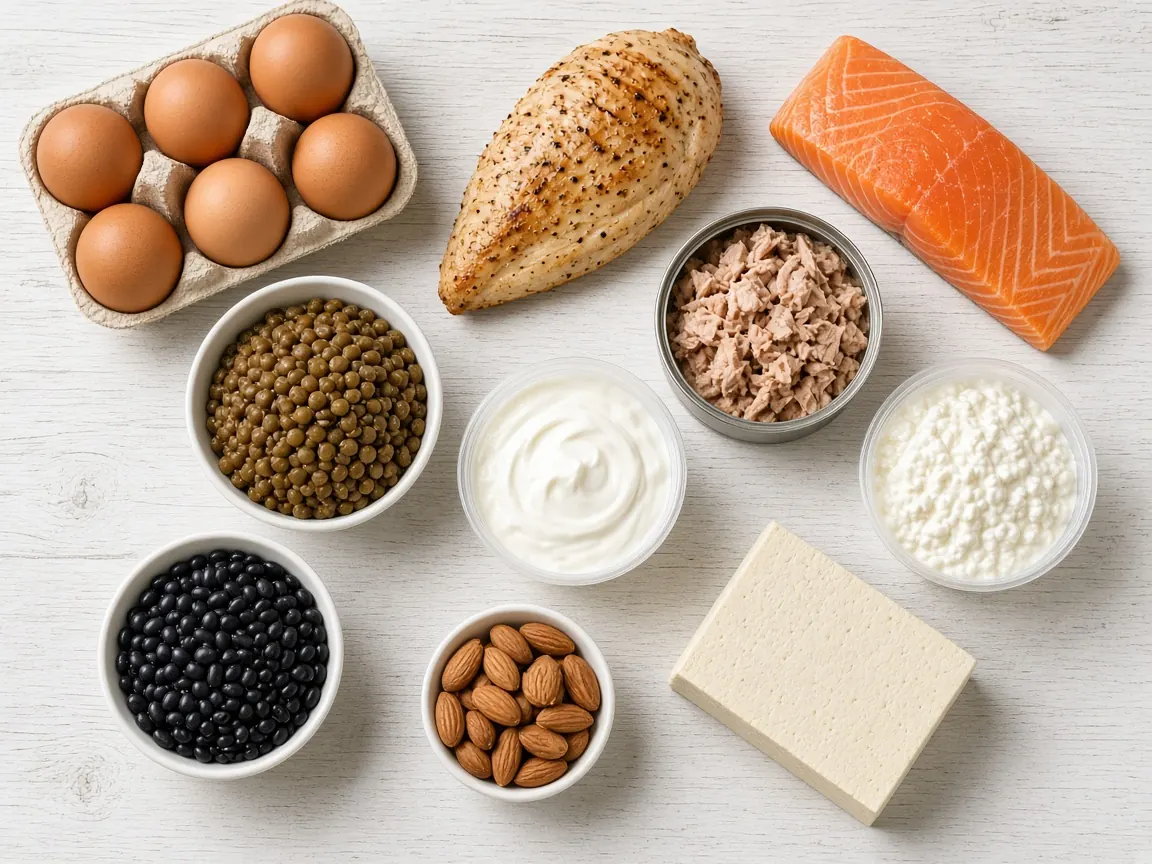
Plant-based protein sources
| Food | Serving | Protein | Calories ≈ |
|---|---|---|---|
| Lentils, cooked | 1 cup (198 g) | 18 g | 230 |
| Black beans, cooked or canned and drained | 1 cup (172 g) | 15 g | 225 |
| Chickpeas, cooked or canned and drained | 1 cup (164 g) | 15 g | 270 |
| Edamame, shelled, cooked | 1 cup (155 g) | 18 g | 190 |
| Tempeh | 3 oz (85 g) | 17 g | 165 |
| Firm tofu (varies a lot by brand: check the label) | 4 oz (113 g) | 10–17 g | 90–165 |
| Quinoa, cooked | 1 cup (185 g) | 8 g | 220 |
| Peanut butter | 2 tbsp (32 g) | 7 g | 190 |
| Almonds | 1 oz (28 g) | 6 g | 165 |
| Rolled oats / porridge oats, dry | ½ cup (40 g) | 5 g | 150 |
| Whole-wheat bread | 1 slice | 4 g | 90 |
Plant foods usually bring fibre and carbohydrates along with protein, so the calories per gram of protein are higher than for lean meat or fish. That is not a drawback, just something to know when you are tracking calories.
Which foods give the most protein for the calories?
If you are eating in a calorie deficit, the best choices are those with a high protein-to-calorie ratio: chicken or turkey breast, shrimp, white fish, egg whites, nonfat Greek yogurt and skyr, which all deliver a gram of protein for roughly 4 to 6 calories. Fattier foods are still healthy but give far less protein per calorie: salmon is about 9 calories per gram of protein, cheddar about 16 and peanut butter about 27, so portion size matters more.
How much protein do you need?
| Body weight | Basic health (0.8 g/kg) | Active adults (1.2–1.4 g/kg) | Muscle gain or fat loss while lifting (1.6–2.2 g/kg) |
|---|---|---|---|
| 130 lb (59 kg) | 47 g | 71–83 g | 94–130 g |
| 160 lb (73 kg) | 58 g | 87–102 g | 116–160 g |
| 200 lb (91 kg) | 73 g | 109–127 g | 145–200 g |
Guidance: the US Recommended Dietary Allowance is 0.8 g/kg for adults (Dietary Guidelines for Americans); UK guidance is 0.75 g/kg (NHS). The higher ranges come from a 2018 meta-analysis (Morton et al., British Journal of Sports Medicine) that found extra muscle gain from resistance training up to roughly 1.6 g/kg/day. People with kidney disease should follow medical advice. Use our calorie and macro calculator to work out your own target.
A sample day with about 132 g of protein
| Meal | What to eat | Calories ≈ | Protein ≈ |
|---|---|---|---|
| Breakfast | 3 large eggs scrambled in 1 tsp olive oil | 255 | 18 g |
| Breakfast | 1 slice whole-wheat toast | 90 | 4 g |
| Breakfast | 1 medium banana | 105 | 1 g |
| Snack | ¾ cup plain nonfat Greek yogurt + 1 oz almonds | 264 | 23 g |
| Lunch | Tuna sandwich: 1 can tuna (4 oz drained), 2 slices whole-wheat bread, 1 tbsp light mayo | 320 | 30 g |
| Lunch | 1 medium apple | 95 | 0 g |
| Dinner | 4 oz grilled chicken breast | 185 | 35 g |
| Dinner | 1 cup cooked brown rice | 215 | 5 g |
| Dinner | 1 cup steamed broccoli with 1 tsp olive oil | 95 | 4 g |
| Evening | ½ cup low-fat cottage cheese | 90 | 12 g |
| Total | 1,714 | 132 g |
This day is built from ordinary supermarket food and totals roughly 1,714 calories, which suits many smaller or less active adults aiming to lose fat. If you need more calories, add a cup of cooked rice or pasta, a second slice of toast or an extra tablespoon of olive oil rather than extra protein. For full plans see our weight-loss diet plan and muscle-gain diet plan.
Tips for hitting your protein target
- Anchor each meal with a palm-sized portion of protein (roughly 4 oz or 100–120 g cooked), rather than trying to fix it at dinner.
- Use easy snacks: Greek yogurt, cottage cheese, boiled eggs, jerky, edamame, canned tuna or a protein shake.
- Batch cook chicken thighs, lentils or a tray of baked fish on Sunday to cover several meals.
- Check labels: US labels show protein per serving; UK labels show it per 100 g and often per portion. Compare the same weight before you buy.
- Spread it out: 25–40 g per meal across three or four meals works well for most people, but your daily total matters more than timing.
Budget and plant-based swaps
Eggs, canned tuna, dried lentils, frozen chicken thighs, tofu and store-brand Greek yogurt are consistently the cheapest ways to buy protein. For a vegetarian or vegan day, swap the eggs for tofu scramble, the tuna for chickpea salad, the chicken for tempeh or lentils, and the cottage cheese for soy yogurt, and add a scoop of pea or soy protein if you fall short.
Printable protein cheat sheet
Keep this list on the fridge or take it shopping. The print version hides menus and images.
| Food (typical portion) | Protein ≈ | kcal ≈ |
|---|---|---|
| Chicken breast, cooked, 3 oz (85 g) | 26 g | 140 |
| Canned tuna in water, drained, 3 oz | 20 g | 100 |
| Salmon, cooked, 3 oz | 22 g | 175 |
| Lean ground beef (93%), cooked, 3 oz | 22 g | 165 |
| Nonfat Greek yogurt, 6 oz (170 g) | 17 g | 100 |
| Cottage cheese, low-fat, ½ cup | 12–14 g | 90 |
| Eggs, 2 large | 12 g | 145 |
| Firm tofu, ½ cup (125 g) | 17–20 g | 180 |
| Lentils, cooked, 1 cup | 18 g | 230 |
| Edamame, shelled, 1 cup | 18 g | 190 |
| Whey protein, 1 scoop (30 g) | 20–25 g | 110–130 |
Frequently asked questions
What are the best high-protein foods?
How much protein do I need per day?
Do I need protein powder?
What is the cheapest source of protein?
Is plant protein as good as animal protein?
Can too much protein hurt my kidneys?

Published 29 November 2026 · Last updated 29 November 2026. We cite the source and date for every price or statistic and correct errors quickly. Read how we research or report a mistake to [email protected].