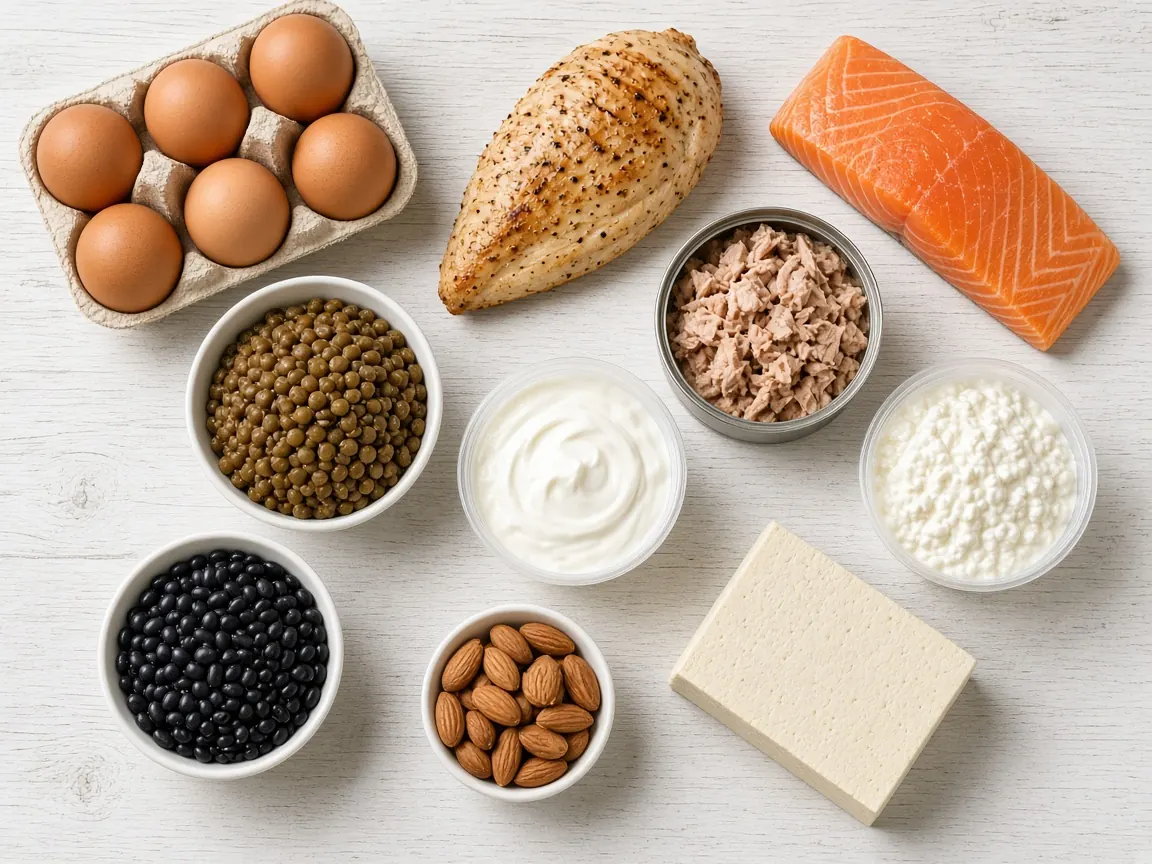
A realistic plan with ordinary supermarket food (US and UK), measured in both cups/ounces and grams. It is a template, not a prescription: change the foods to suit your tastes, allergies and culture, and keep the calories and protein roughly the same.
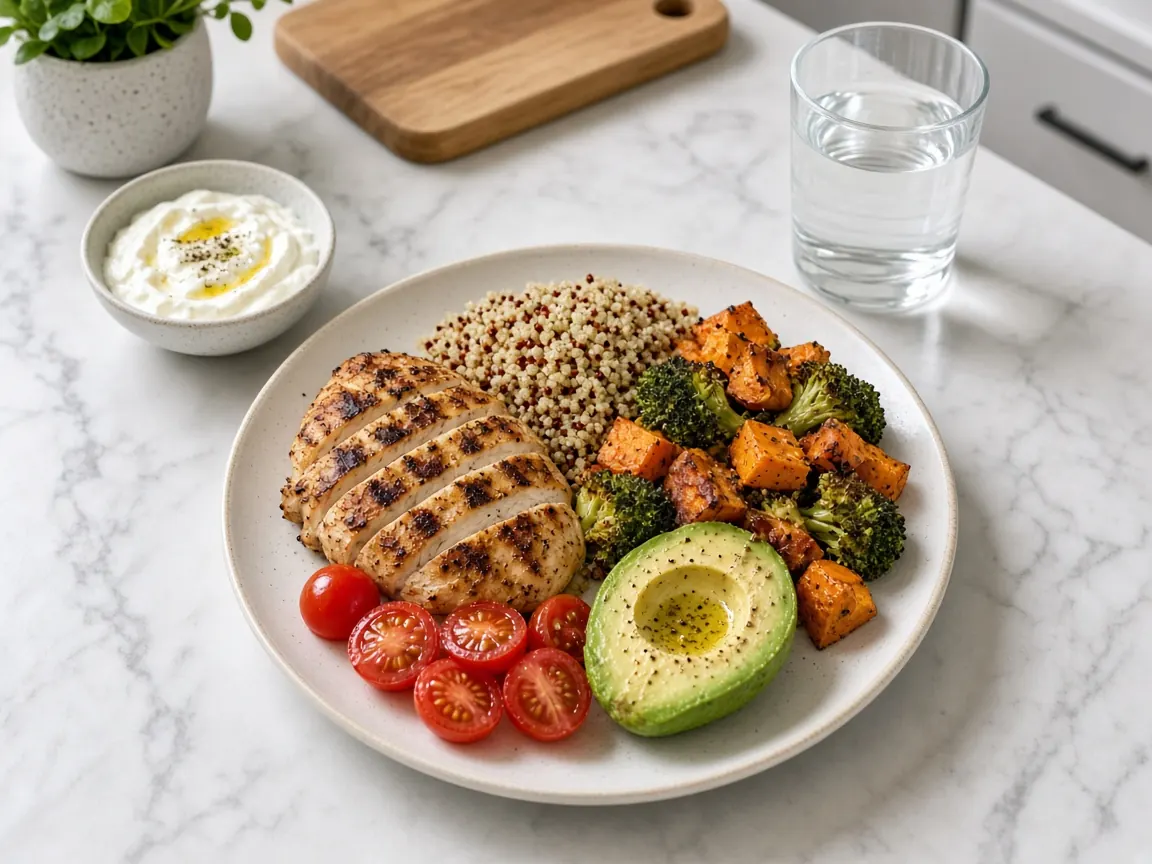
Sample day: about 1,579 calories and 114 g protein
| Meal | What to eat (portion) | kcal ≈ | Protein g ≈ |
|---|---|---|---|
| Breakfast | ½ cup (40 g) rolled oats cooked with ¾ cup 2% / semi-skimmed milk, 1 medium banana, 2 boiled eggs | 489 | 24 |
| Lunch | Grilled chicken salad: 4 oz (113 g) chicken breast, 2 cups mixed greens, cucumber, tomato, ¼ avocado, 1 tbsp olive oil and vinegar, 1 slice whole-wheat toast | 505 | 42 |
| Snack | ¾ cup (170 g) plain nonfat Greek yogurt with ½ cup blueberries | 145 | 17 |
| Dinner | 4 oz (113 g) baked salmon, 1 medium baked sweet potato, 1 cup roasted broccoli with 1 tsp olive oil | 440 | 31 |
| Daily total (approx.) | 1,579 | 114 | |
Calories and protein are approximate, rounded values based on USDA FoodData Central for plain, home-cooked portions. Oil, butter, sauces and portion size change totals a lot: weigh or measure portions for a week to learn what they look like.
7-day meal ideas
| Day | Breakfast | Lunch | Dinner |
|---|---|---|---|
| Mon | Oatmeal / porridge, banana, 2 boiled eggs | Chicken salad + whole-wheat toast | Baked salmon, sweet potato, broccoli |
| Tue | Greek yogurt, berries, ¼ cup granola | Turkey and avocado whole-wheat wrap + apple | Chicken stir-fry with mixed vegetables and ¾ cup brown rice |
| Wed | 2-egg omelet with spinach, 1 slice toast, orange | Tuna salad (4 oz tuna) on greens + 1 slice toast | Lean beef chili (beans, tomatoes) with a small side salad |
| Thu | Overnight oats with milk, chia and berries | Lentil soup + side salad + 1 slice bread | Baked cod, roasted potatoes (1 small), green beans |
| Fri | Scrambled eggs (2) on toast with tomato | Chicken and quinoa bowl with roasted vegetables | Homemade turkey burger in a lettuce wrap or small whole-wheat bun, sweet potato wedges |
| Sat | Cottage cheese with fruit and 1 slice toast | Whole-wheat pita with hummus, chicken and cucumber | Shrimp and vegetable stir-fry with ¾ cup rice |
| Sun | Veggie scramble (2 eggs + peppers, mushrooms), 1 slice toast | Leftover chili or soup + salad | Roast chicken breast, roasted vegetables, small jacket / baked potato |
Add a piece of fruit or a small handful (1 oz / 28 g) of nuts as a snack if you are hungry, and keep drinks mostly zero-calorie: water, sparkling water, black coffee or unsweetened tea.
Portion guide (no scale needed)
| Food | Rough portion | Equals about |
|---|---|---|
| Lean protein (chicken, fish, tofu) | Palm of your hand | 4 oz / 113 g cooked |
| Cooked rice, pasta or quinoa | Cupped hand | ½–¾ cup / 100–140 g |
| Vegetables | Two fists | 1–2 cups, as much as you like |
| Oil, butter, nut butter | Thumb tip | 1 tbsp = about 100–120 kcal |
| Cheese | Two dice | 1 oz / 28 g |
UK and US swaps
- Porridge (UK) = oatmeal (US): same food, same calories. Skip the sachets with added sugar.
- Semi-skimmed milk (UK) = 2% milk (US): about 120 kcal per cup.
- Jacket potato (UK) = baked potato (US): about 160 kcal for a medium one; the toppings (butter, cheese, beans, tuna) are what add up.
- Baked beans on wholemeal toast (UK): a filling, fibre-rich option at about 300 kcal for a ½ cup (can) serving and two slices; choose reduced-sugar and reduced-salt beans.
- Mince and prawns (UK) = ground beef and shrimp (US): pick lean mince (5–10% fat).
10 rules that make it work
- Measure oil and butter with a spoon for two weeks.
- Fill half your plate with vegetables or salad.
- Protein at every meal: eggs, Greek yogurt, chicken, fish, tofu, beans.
- Drink calories rarely: soda, juice, sweet coffee drinks and alcohol add up fast.
- Swap chips, cookies and pastries for fruit, nuts, popcorn or yogurt.
- Check restaurant and takeaway calories before ordering.
- Walk 7,000–10,000 steps a day where possible.
- Strength train 2–3 times a week to keep muscle.
- Sleep 7–9 hours.
- Weigh yourself a few times a week and look at the weekly average, not one day.
What realistic progress looks like
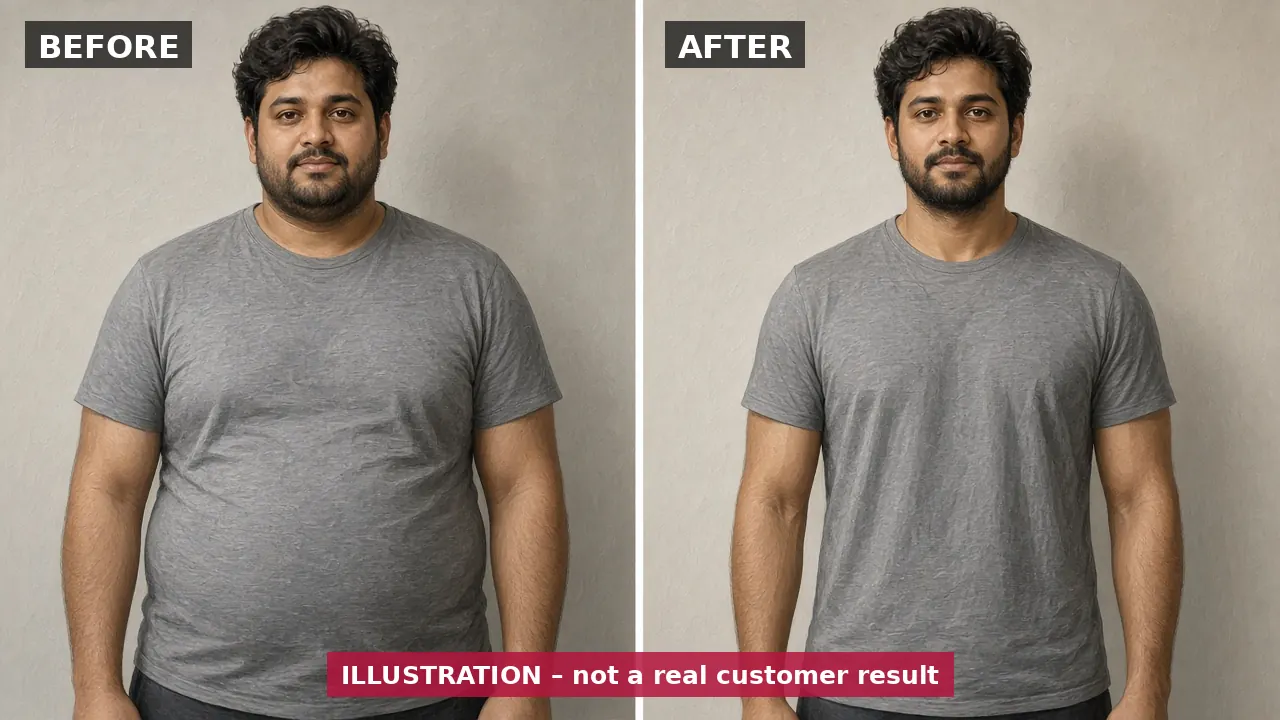
We will never show “real customer” before-and-after photos we can’t verify. The image above is an artistic illustration to show the kind of change a sustained calorie deficit can produce over many months.
Sources: CDC: Healthy Weight, NHS Better Health: Lose weight.
Shopping list for the week
This list covers the 7-day menu for one person. US names come first and UK names are in brackets. Buy frozen vegetables and fruit to cut waste and cost.
Protein
- Chicken breast, about 2 lb (900 g)
- Eggs, 1 dozen
- Nonfat Greek yogurt, 2 large tubs (fat-free Greek-style yoghurt)
- Canned tuna in water, 3 cans (tinned tuna in spring water)
- Salmon fillets, 2
- Cottage cheese or skyr, 1 tub
- Canned beans or lentils, 2–3 cans (tinned)
Carbs and produce
- Rolled oats (porridge oats)
- Whole-wheat bread or wraps (wholemeal)
- Brown rice or microwave rice pouches
- Potatoes or sweet potatoes
- Bananas, berries (frozen is fine), apples
- Salad greens, cucumber, tomatoes
- Frozen mixed vegetables, broccoli, spinach
Extras
- Olive oil spray (1-cal spray)
- Hummus, salsa, mustard, hot sauce
- Peanut butter, 1 small jar
- Herbs, spices, stock cubes
Drinks
- Sparkling water or diet soda (diet fizzy drinks)
- Tea and coffee
- Skim or 1% milk (skimmed or semi-skimmed)
Daily calorie and protein targets by body size
| If your maintenance is… | Eat about | Protein target | Easy change to this plan |
|---|---|---|---|
| 1,800–2,000 kcal | 1,300–1,500 | 90–110 g | Drop the afternoon snack |
| 2,000–2,300 kcal | 1,500–1,800 | 100–130 g | Follow the plan as written |
| 2,300–2,700 kcal | 1,800–2,200 | 120–150 g | Add a slice of toast and ½ cup of rice |
| 2,700+ kcal | 2,200+ | 140–170 g | Add a protein shake and a larger dinner portion |
Work out your own maintenance calories with the calorie calculator and your protein target with the protein calculator.
FAQs
How many calories should I eat to lose weight?
How fast should I lose weight?
Is this plan suitable for vegetarians?
Do I need to count calories?
Can I eat out or get takeaway on this plan?
What if I stop losing weight?

Published 28 November 2026 · Last updated 29 November 2026. We cite the source and date for every price or statistic and correct errors quickly. Read how we research or report a mistake to [email protected].