From November to March, cold winds, dry indoor heating and long hot showers make dry, tight, flaky skin common across the US, Canada and the UK. Lips crack, hands become rough and heels split. A winter skincare routine does not need to be expensive. It needs the right kind of moisturizer, applied the right way, and a few habit changes.
Why winter dries your skin
The outer layer of your skin is like a brick wall: skin cells are the bricks and natural fats (ceramides, cholesterol and fatty acids) are the mortar. Cold, dry air and indoor heating pull water out of this barrier. Hot water and harsh soaps wash away the fats. The result is tightness, flaking, itching and, in people prone to eczema, red patches.
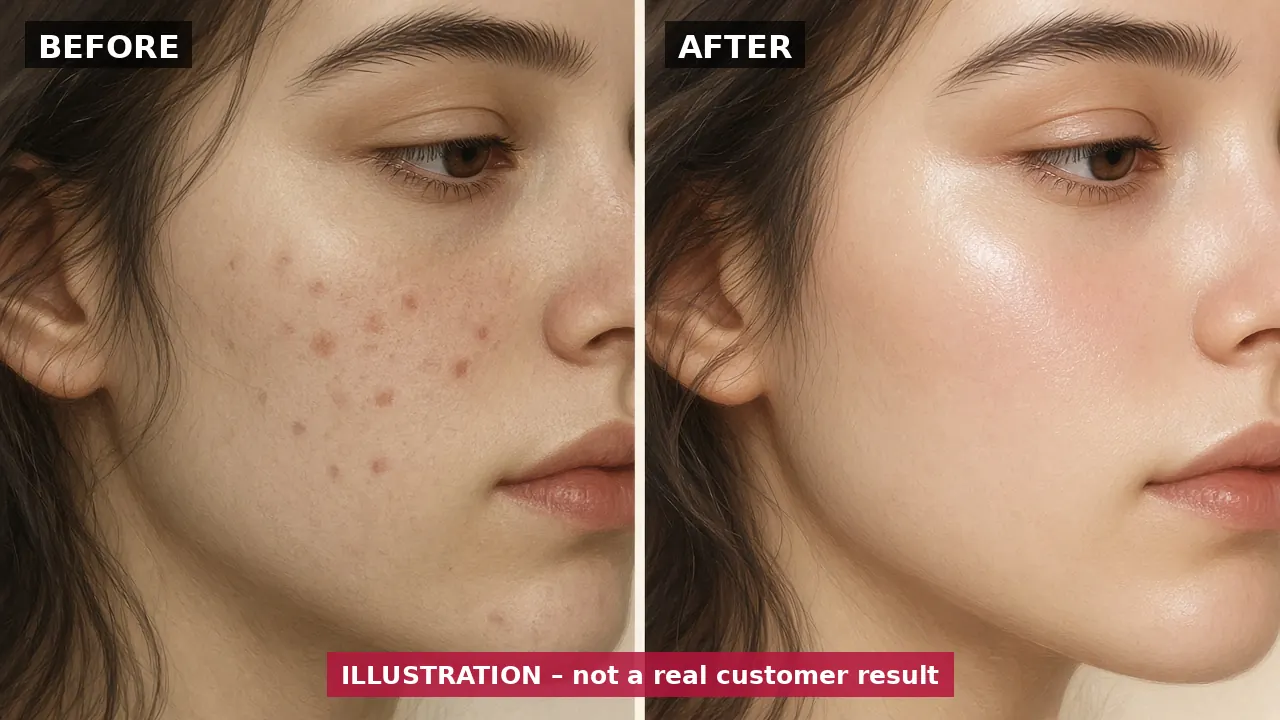
The winter routine for dry skin
| Step | Morning | Night |
|---|---|---|
| 1. Cleanse | Rinse with lukewarm water, or a gentle non-foaming cream cleanser | Gentle cream or lotion cleanser |
| 2. Moisturise | Cream with ceramides, glycerin or hyaluronic acid, on damp skin | Richer cream; add a thin layer of petroleum jelly on very dry patches |
| 3. Protect | Broad-spectrum SPF 30+ (cream sunscreens suit dry skin) | — |
| Lips & hands | Lip balm; hand cream after every wash | Thick lip balm; hand cream and cotton gloves if cracked |
Choosing a winter moisturizer
Good moisturizers combine three types of ingredients:
- Humectants pull water into the skin: glycerin, hyaluronic acid, urea, panthenol.
- Emollients smooth and soften: ceramides, fatty acids, squalane, shea butter.
- Occlusives seal water in: petrolatum (petroleum jelly), dimethicone, lanolin.
In winter, most people with dry skin do best with a cream or ointment rather than a light gel. Fragrance-free products are less likely to sting cracked skin. Our moisturizer guide explains which texture suits each skin type.
The 3-minute rule
Apply moisturizer within about three minutes of washing or bathing, while the skin is still slightly damp. This traps the water on your skin instead of letting it evaporate. It is the single most effective change most people can make.
Habits that help
- Shorter, warm (not hot) showers, ideally under 10 minutes.
- Soap only where needed (underarms, groin, feet); plain water elsewhere if your skin is very dry.
- Pat dry instead of rubbing with a towel.
- Add moisture to the room: a humidifier, or a bowl of water near the heater, can help.
- Drink enough water and eat healthy fats (nuts, seeds, fish), though diet alone will not fix dry skin.
- Wear gloves outdoors and when washing dishes.
Lips, hands and heels
Lips: use a plain balm with petrolatum, beeswax or shea; avoid licking your lips and flavoured balms that encourage it. Hands: apply cream after every wash; at night, use a thick layer under cotton gloves. Heels: after a bath, use a cream with urea or lactic acid, then cotton socks. A pumice stone used gently once a week can help, but do not cut hard skin with a blade.
A budget winter routine
You do not need expensive products for winter dryness. A simple, low-cost routine works for most people:
- Cleanser: a mild, fragrance-free cream or lotion cleanser, or just lukewarm water in the morning.
- Moisturizer: a plain fragrance-free cream with glycerin; many affordable drugstore and pharmacy creams work well (examples sold in both countries include CeraVe, Cetaphil, Eucerin and Vaseline; in the UK also E45 and Aveeno).
- Sealant: a small tub of petroleum jelly for lips, hands, heels and dry patches.
- Sunscreen: any broad-spectrum SPF 30+ you will actually wear daily.
Spend more only if a specific problem, such as eczema or acne, needs a targeted product, ideally on a doctor's advice.
Keep using sunscreen and actives carefully
UV levels fall in winter but do not vanish. In the UK the UV index is usually under 3 from October to March, so SPF is optional for a short walk; in much of the US, and anywhere with snow or altitude, UV can still be strong enough to burn and darken marks. If you use retinol or exfoliating acids, your skin may become more sensitive in winter; reduce to two or three nights a week and use a richer moisturizer on top. See our sunscreen guide and retinol guide.
US vs UK winters: what changes
- Northern US and Canada: very cold, dry air and forced-air heating can push indoor humidity below 20%. A humidifier set to about 30–50% humidity helps, and a richer cream or ointment is worth using.
- The UK: winters are milder but damp and windy, and central heating still dries the air. In hard-water areas such as much of London and the south-east, some people find soaps and cleansers feel more drying: a gentle, soap-free cleanser and moisturizing straight after washing helps.
- Where to shop: drugstores, Target and Ulta in the US; Boots, Superdrug and supermarkets in the UK. If you have eczema, a GP or dermatologist can prescribe emollients and treatments, and in England many emollients are available on prescription.
Oily skin in winter?
Oily skin can also become dehydrated in winter: shiny and tight at the same time. Keep your usual light moisturizer, add a hydrating serum with glycerin or hyaluronic acid, and avoid stripping cleansers. Our oily and acne-prone skin routine has more tips.
When to see a doctor
See a doctor or dermatologist if dryness comes with intense itching that disturbs sleep, red or weeping patches, thickened skin, bleeding cracks or signs of infection. These can be eczema or another skin condition that needs prescription treatment.
Frequently asked questions
What is the best winter skincare routine for dry skin?
Why does my skin get so dry in winter?
Do I need sunscreen in winter?
Is Vaseline good for dry skin?
What should I use for cracked heels?
Should I use coconut oil or olive oil on my skin in winter?

Published 29 November 2026 · Last updated 29 November 2026. We cite the source and date for every price or statistic and correct errors quickly. Read how we research or report a mistake to [email protected].