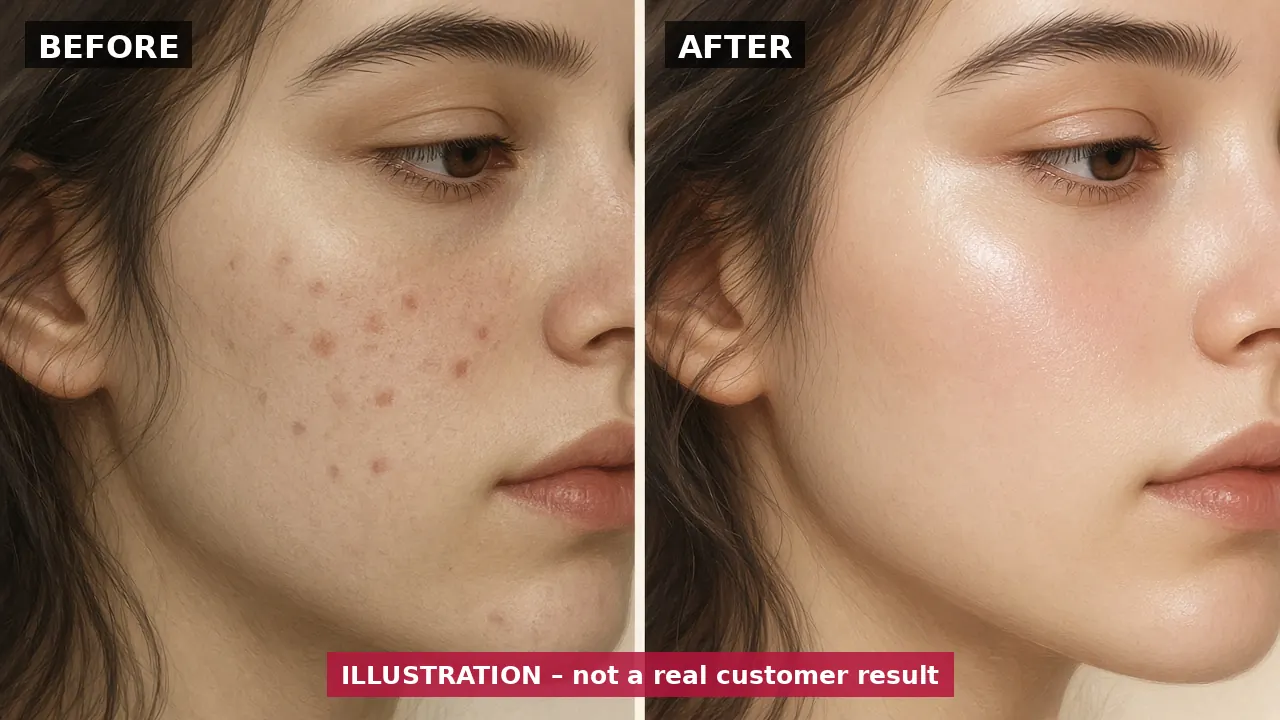
Humid summers, central heating, stress, hormones and heavy products all make oily and acne-prone skin a daily struggle for many adults in the US and UK, and acne is not just a teenage problem: many people in their 20s, 30s and 40s deal with it too. The good news: a short routine with one or two proven ingredients works better than a shelf of products, home remedies or harsh scrubs. Here is a dermatologist-style routine for oily skin, the ingredients that have real evidence, and the habits that quietly make acne worse.
Why oily skin breaks out
Acne forms when oil (sebum) and dead skin cells clog a pore, acne bacteria multiply inside it, and the skin becomes inflamed. Hormones, genetics, stress, some medicines and certain cosmetics all play a part. Humid weather, sweat, masks and heavy products can add to clogging. That is why the most effective treatments target clogged pores, bacteria and inflammation, not just surface oil.
Background: American Academy of Dermatology: Acne.
A simple routine for oily, acne-prone skin
| Step | Morning | Night |
|---|---|---|
| 1. Cleanse | Gentle gel or foaming cleanser, lukewarm water | Same cleanser; double-cleanse only if you wore heavy sunscreen or makeup |
| 2. Treat | Niacinamide or benzoyl peroxide (if prescribed for mornings) | Salicylic acid or adapalene or benzoyl peroxide (one at a time) |
| 3. Moisturise | Light, oil-free, non-comedogenic gel or lotion | Same, or slightly richer if your skin feels dry from treatment |
| 4. Protect | Broad-spectrum SPF 30+ gel or fluid sunscreen | — |
Start with one active ingredient for 2–3 weeks, three nights a week, then increase. Adding several acids and retinoids at once is the most common cause of red, burning, peeling skin. See our beginner skincare routine for the basics.
Ingredients that work (and how to use them)
| Ingredient | Typical strength | Best for | Watch out for |
|---|---|---|---|
| Salicylic acid (BHA) | 0.5–2% | Unclogs pores, blackheads, whiteheads | Can dry or sting; start every other day |
| Benzoyl peroxide | 2.5–5% | Red, inflamed pimples; kills acne bacteria | Bleaches towels and clothes; can dry skin; 2.5% is often as effective and gentler |
| Adapalene (retinoid) | 0.1% | Prevents clogged pores; long-term control | Use at night; dryness at first; avoid in pregnancy; ask a pharmacist or doctor |
| Niacinamide | 2–5% | Oil appearance, redness, uneven tone | Usually gentle; higher strengths can irritate some people |
| Azelaic acid | 10–20% | Pimples and dark marks | Tingling at first; often used for pigmentation too |
| Sunscreen (gel / fluid) | SPF 30+ | Prevents dark marks getting darker | Needed daily, even indoors near windows |
Strengths are those commonly sold over the counter or recommended in dermatology guidance. Availability and rules for adapalene and other retinoids differ by country; ask a pharmacist or dermatologist.
Choosing a cleanser for oily skin
A good cleanser removes sweat, sunscreen and excess oil without leaving the skin squeaky and tight. Look for a gentle gel or low-foam cleanser labelled non-comedogenic or suitable for oily or acne-prone skin. Medicated cleansers with salicylic acid or benzoyl peroxide can be useful, but they stay on the skin only briefly, so leave-on treatments usually work better. If your skin stings, burns or feels tight after washing, your cleanser is too harsh. Bar soaps and strong face washes with high-foaming detergents are a common cause of irritation.
What to buy in the US and UK
The ingredients above are sold under many names, and the rules differ by country. In the US, adapalene 0.1% gel and benzoyl peroxide washes and gels are sold over the counter at drugstores such as CVS and Walgreens, at Target and at beauty stores such as Ulta. In the UK, benzoyl peroxide and adapalene products are usually sold by pharmacists at places like Boots and Superdrug, and stronger options need a prescription from a GP. Salicylic acid cleansers, niacinamide serums and gel moisturizers are widely available in both countries from brands such as CeraVe, La Roche-Posay, Neutrogena, Cetaphil and The Ordinary. Brands are examples only: we have not tested them and they are not endorsements. A pharmacist can recommend a suitable strength, and a GP or dermatologist can prescribe stronger treatment if over-the-counter products are not enough after about three months.
Habits that make acne worse
- Scrubbing and over-washing. Washing more than twice a day or using rough scrubs irritates skin and can increase oil and redness.
- Picking and squeezing. This pushes inflammation deeper and leaves dark marks and scars.
- Heavy oils and creams. Coconut oil, thick creams and some hair oils can clog pores along the forehead and hairline.
- Home "remedies" such as toothpaste, lemon, baking soda or raw garlic, which can burn the skin.
- Unregulated "miracle" creams. Creams bought from unverified online sellers can contain undeclared steroids that cause acne, thin skin and rebound redness. Stick to products from regulated retailers with a full ingredient list.
- Dirty phone screens, pillowcases and helmet straps rubbing on the same area.
Dark marks after pimples
On brown skin, pimples often leave dark marks (post-inflammatory hyperpigmentation) that last months. The best prevention is treating acne early, not picking, and using sunscreen every day. Ingredients such as azelaic acid, niacinamide, vitamin C and retinoids can help marks fade over time. See our vitamin C guide and retinol guide.
Sunscreen for oily skin
Many people with oily skin skip sunscreen because it feels greasy. Look for words like gel, fluid, matte or non-comedogenic, use enough (about two finger-lengths for face and neck), and reapply when you are outdoors. Our sunscreen guide explains SPF and how to choose.
Diet and acne: what the evidence says
Research suggests that, for some people, diets high in sugar and refined carbohydrates (high glycaemic load) and large amounts of milk may be linked to more acne, though the effect varies. Reasonable steps are cutting sugary drinks and sweets, choosing whole grains, and seeing whether reducing milk helps you. There is no need to stop all oily food or chocolate if they do not trigger you.
When to see a dermatologist
See a qualified dermatologist if you have painful nodules or cysts, scarring, acne that has not improved after 3 months of consistent treatment, or signs of a hormonal cause (irregular periods, excess facial hair). Prescription options such as topical antibiotics combined with benzoyl peroxide, stronger retinoids, hormonal treatment or isotretinoin need medical supervision. Isotretinoin in particular must only be used under a doctor's care.
Oily skin do’s and don’ts
✅ Do
- Wash twice a day, and after sweaty workouts, with a gentle foaming or gel cleanser.
- Moisturize every day with an oil-free, non-comedogenic lotion or gel.
- Wear broad-spectrum SPF 30+ in a light gel or fluid texture.
- Choose one proven active, such as salicylic acid, benzoyl peroxide, adapalene or niacinamide.
- Blot shine during the day with oil-absorbing papers.
- Change pillowcases and wipe your phone screen often.
🚫 Don’t
- Scrub hard or use gritty exfoliants every day.
- Skip moisturizer because your skin feels oily.
- Layer several acids and retinoids at once.
- Use alcohol-heavy toners that leave skin tight.
- Pick or squeeze spots. This raises the risk of marks and scars.
- Judge a new product before 8–12 weeks.
Your routine at a glance
| Step | Morning | Night |
|---|---|---|
| 1. Cleanse | Gentle foaming or gel cleanser | Same cleanser. Double-cleanse if you wear makeup or heavy sunscreen. |
| 2. Treat | Optional niacinamide serum | One active: salicylic acid, benzoyl peroxide or adapalene |
| 3. Moisturize | Oil-free gel or lotion | Same, or slightly richer if your active is drying |
| 4. Protect | Broad-spectrum SPF 30+ | None needed |
Frequently asked questions
What is the best skincare routine for oily, acne-prone skin?
Should oily skin use moisturizer?
Are clay masks good for oily skin?
How long does it take for acne treatment to work?
When should I see a dermatologist for acne?
Can I use toothpaste or lemon on pimples?

Published 29 November 2026 · Last updated 29 November 2026. We cite the source and date for every price or statistic and correct errors quickly. Read how we research or report a mistake to [email protected].