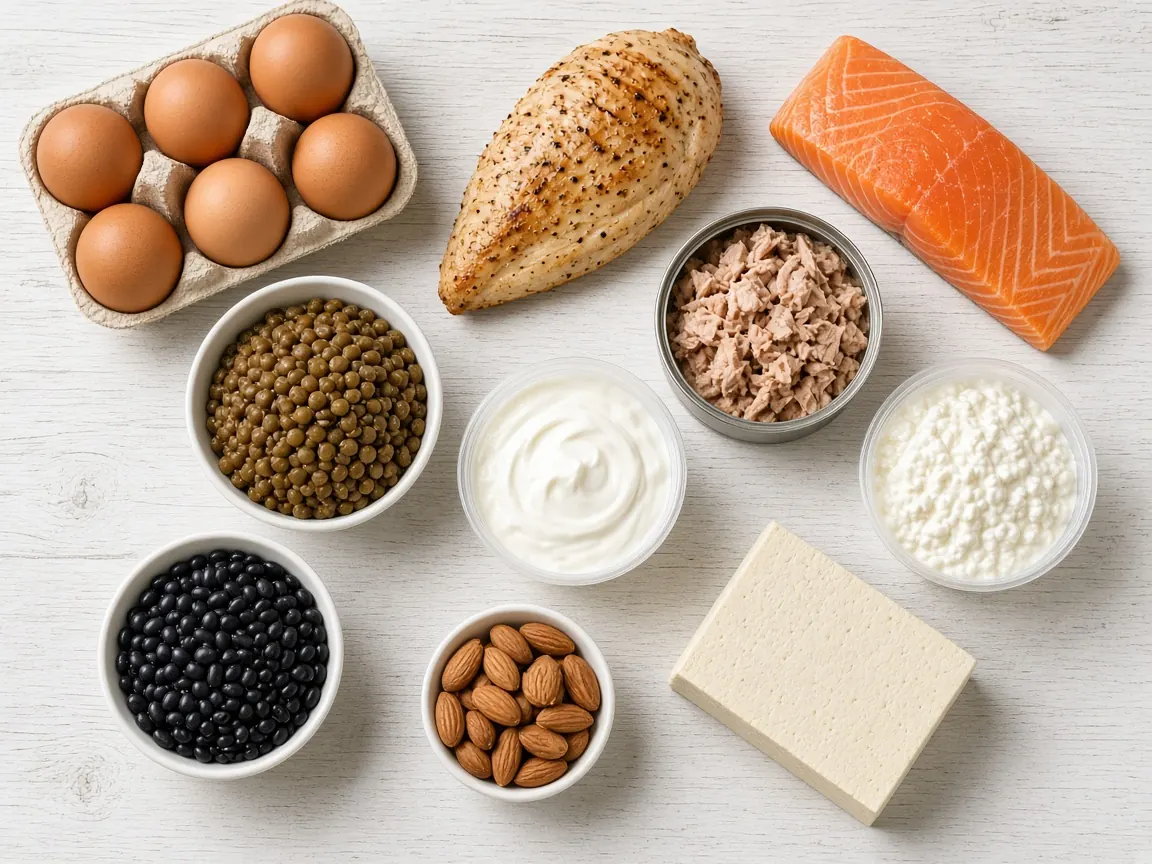
A high-protein, calorie-surplus template built from ordinary US and UK supermarket foods. Adjust portions to your calculator target and swap foods freely, keeping protein and calories similar.
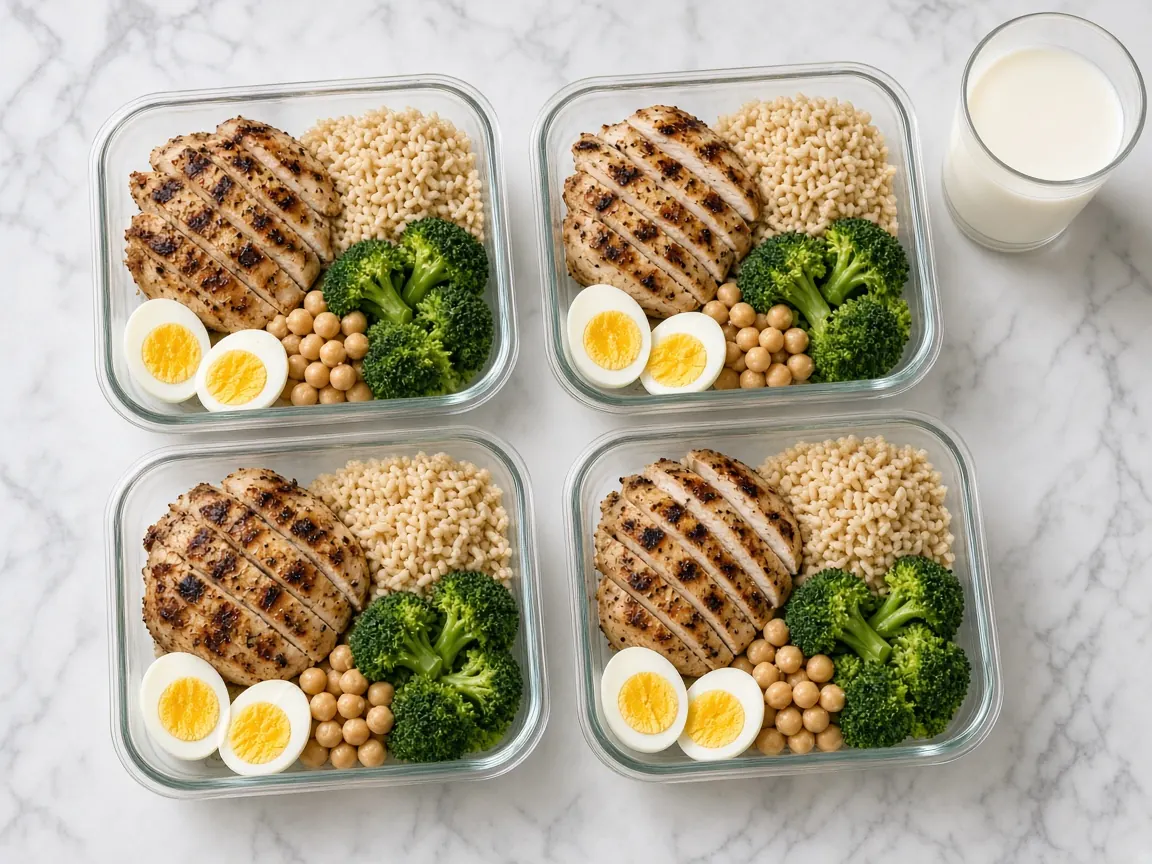
Sample day: about 2,612 calories and 179 g protein
| Meal | What to eat (portion) | kcal ≈ | Protein g ≈ |
|---|---|---|---|
| Breakfast | 1 cup (80 g dry) rolled oats cooked in 1 cup 2% milk, 1 banana, 1 tbsp peanut butter, 2 scrambled eggs | 764 | 35 |
| Lunch | Chicken burrito bowl: 4 oz (113 g) chicken breast, 1 cup brown rice, ½ cup black beans, salsa, 1 oz shredded cheddar | 628 | 55 |
| Snack | Shake: 1 scoop whey, 1 cup 2% milk, 1 banana, ice | 345 | 33 |
| Dinner | 4 oz (113 g) baked salmon, 1 cup white rice, 1 cup roasted vegetables with 1 tbsp olive oil | 610 | 33 |
| Evening | ¾ cup plain nonfat Greek yogurt + 1 oz (28 g) almonds | 265 | 23 |
| Daily total (approx.) | 2,612 | 179 | |
Calories and protein are approximate, rounded values based on USDA FoodData Central for plain, home-cooked portions. Oil, butter, sauces and portion size change totals a lot: weigh or measure portions for a week to learn what they look like.
This day suits an active person of around 180–200 lb (82–91 kg) who wants to gain lean muscle slowly. Smaller or lighter people should reduce portions; larger or very active people should add rice, potatoes, oats, milk or olive oil rather than more protein.
How to adjust it
- Not gaining after 2–3 weeks? Add 150–250 kcal a day, for example another cup of cooked rice or a glass of milk.
- Gaining faster than about 0.5 lb (0.25 kg) a week? Trim 150–250 kcal; extra gain is mostly fat.
- Vegetarian? Swap chicken and salmon for tofu, tempeh, lentils or extra eggs and dairy.
- On a budget? Eggs, oats, rice, bananas, beans, milk, chicken thighs and canned tuna are cheap and effective.
Best foods for muscle gain
| Need | Good choices | Why |
|---|---|---|
| Protein | Chicken, turkey, lean beef, fish, eggs, Greek yogurt, cottage cheese, tofu, whey | Repair and build muscle |
| Carbs | Oats, rice, potatoes, pasta, whole-grain bread, fruit | Fuel hard training |
| Healthy fats | Olive oil, nuts, nut butter, avocado, salmon | Calorie-dense and good for health |
| Micronutrients | Vegetables, fruit, dairy or fortified alternatives | Overall health and recovery |
Training basics
- Train each muscle group about twice a week.
- Use compound lifts: squats, deadlifts or hip thrusts, presses, rows, pull-ups.
- Add a little weight or a rep each week (progressive overload).
- Sleep 7–9 hours; muscle is built during recovery.
No gym? See our home workout gear guide.

FAQs
How many calories do I need to build muscle?
How much protein should I eat to build muscle?
Do I need supplements?
Can I build muscle as a vegetarian or vegan?
How often should I train?
I struggle to eat enough. What helps?

Published 28 November 2026 · Last updated 29 November 2026. We cite the source and date for every price or statistic and correct errors quickly. Read how we research or report a mistake to [email protected].